The clock is ticking… but does the time really matter? Let’s find your flow!
We’ve all been there: staring at our yoga mat, thinking, “Should I tackle this before my first cup of coffee, or let it melt away the stress after a chaotic day?” The world of yoga is wonderful because it’s so flexible—pun absolutely intended—but that flexibility can also be confusing.
When it comes to getting on the mat, there’s a big, beautiful debate that keeps going: Morning Yoga vs. Evening Yoga.
It’s not just about scheduling a free hour. It’s about how the practice connects with your body’s natural rhythm, your daily energy, and even your deepest goals. Do you want to charge up for a focused day? Or do you need a gentle way to power down for a restful night?
The simple, honest truth is that there is no one-size-fits-all answer, and anyone who tells you otherwise probably hasn’t paid close enough attention to the beautiful, messy details of real life. Both morning and evening practices are incredibly beneficial, but they are beneficial in completely different ways.
This isn’t a competition—it’s a guide. We’re going to look closely at what each time of day offers, who it’s best for, and the unique magic you can find whether the sun is rising or setting. By the end, you’ll be able to decide which time of day is truly the better time for you.
☀️ Team Morning Yoga: Rise and Shine (Literally!)
Imagine your day is a beautiful, empty canvas. Morning yoga is the first mindful brushstroke that sets the tone for everything that follows.
For many of us, the time right after waking up is the one small window that is truly ours. The emails haven’t started, the kids aren’t asking for breakfast, and the traffic is still building up. Claiming this time for yourself is a powerful act of self-discipline and self-care.
The Unique Benefits of Starting Your Day on the Mat
Morning practice is all about activating the body and calming the mind before the noise of the day begins. It’s like hitting a ‘reset’ button that’s designed to boost your energy, not drain it.
- ⚡ The Natural Energy Shot: Forget the caffeine rush—yoga is a natural way to wake up. Poses that get your blood flowing and breath moving (like Sun Salutations, which we’ll talk about later) are amazing for shaking off that overnight stiffness and grogginess. You’re oxygenating your brain, which makes you feel more alert and awake than any coffee ever could.
- 🎯 Laser-Sharp Focus and Mental Clarity: When you practice mindfulness and breathwork in the quiet of the morning, you’re creating a mental calm that helps you deal with everything the day throws at you. You set a positive intention, clear the mental clutter, and step into your workday feeling grounded and focused.
- ✅ Boosted Metabolism and Digestion: Getting active early in the day can give your metabolism a healthy nudge. Certain poses involving gentle twists or core work can stimulate your digestive system, helping you feel lighter and ready to take on breakfast and beyond.
- 🧘 Building Undefeatable Consistency: Let’s face it: life gets in the way. It’s often much easier to commit to something first thing in the morning than to try and squeeze it into a jam-packed evening schedule when you’re already exhausted. An early routine is often a routine you can stick to, and consistency is the most important part of any practice.
- 😊 A Dopamine-Fueled Mood Lift: Moving your body releases endorphins, those wonderful “feel-good” chemicals. Starting your day with a mood boost means you’re more likely to tackle problems with patience and optimism. It sets a positive, can-do vibe for the next 12+ hours.
Who is Morning Yoga Best For?
If any of these sound like you, your mat might be calling your name at dawn:
- The Go-Getter: You need energy and focus to power through a demanding workday.
- The Habit Builder: You struggle to stick to a routine because evenings are unpredictable or busy.
- The Stressed-Out Starter: You tend to wake up with a rush of anxiety about the day ahead and need a grounding practice to calm your nerves before they even have a chance to fire up.
- The Sleepy Head: You rely heavily on coffee to wake up and want a healthier, natural way to feel alert.
Human Touch: I used to hit the snooze button four times, feeling like a zombie. The first time I tried just 15 minutes of movement and breathwork before checking my phone, it was like flipping a switch. I still love coffee, but now it’s a treat, not a life support system.
🌑 Team Evening Yoga: Unwind and Recharge
The day is done. You’ve earned your rest. Evening yoga is a ritual of letting go—it’s where you consciously shed the stress, the emails, the difficult conversations, and the tension built up in your muscles from hours of sitting or running around.
Unlike the morning’s need for activation, the evening practice is about de-activation. It’s your ticket to a calm mind and a deep, restful sleep.
The Unique Benefits of Ending Your Day on the Mat
Evening practice is all about releasing tension and preparing the body and mind for true rest. This is where the magic of recovery happens.
- 🛀 Meltdown for Muscles: Your body is naturally more flexible in the evening because your muscles have been moving all day and are already warm. This is the perfect time to explore deeper stretches, hip openers, and restorative poses that target deep-seated tension. That tight neck from staring at your screen all day? The hips locked from too much driving? Evening yoga is their remedy.
- 😴 The Sleep Supercharger: The most celebrated benefit of evening yoga is its profound effect on sleep. Gentle, slow movements and calming breathing techniques (called Pranayama) activate your parasympathetic nervous system—the body’s natural “rest and digest” mode. This process lowers the stress hormone cortisol, making it easier to drift off and stay asleep.
- ⚖️ Emotional Release and Processing: We often hold onto emotions and stress in our bodies. Evening yoga provides a dedicated, safe space to physically and mentally process the day’s events. A few deep breaths in Child’s Pose can be more powerful than endlessly replaying a difficult meeting in your head.
- 📉 Lowering the Stress Hormone: Studies show that evening yoga can help reduce cortisol levels. Cortisol, the main stress hormone, needs to drop in the evening for you to feel sleepy. By actively relaxing, you are giving your body the signal that it’s safe to rest, which is essential for both mental and physical health.
- 🍽️ Aid to Digestion: If you practice an hour or two after dinner, gentle twists and forward folds can help move things along in your digestive system, preventing that heavy, bloated feeling that can ruin a good night’s sleep.
Who is Evening Yoga Best For?
If your focus is more on rest and recovery, the twilight hours are calling:
- The Sleepless Soul: You struggle to fall asleep or toss and turn with a busy mind.
- The Desk Worker: You spend hours sitting and need to relieve back pain, tight hips, and shoulder tension.
- The Stressed-Out Finisher: You carry the weight of your workday—the frustrations, the anxiety—right up until your head hits the pillow.
- The Flexibility Seeker: You want to work on deep, lasting flexibility when your body is naturally warm and receptive to stretching.
🕰️ The Science Behind the Clock: Circadian Rhythms
To really understand which time is best, we need to talk about your body’s master clock: the Circadian Rhythm.
This is the 24-hour cycle that controls when you feel awake, when you feel hungry, and when your body releases hormones like cortisol (stress) and melatonin (sleep). Your yoga practice works with this rhythm.
| Time of Day | Body’s Natural State | Best Yoga Goal |
| Morning (Sunrise) | Cortisol (energy hormone) is high; body is stiff; mind is clear. | Activation, Energy, Focus |
| Evening (Sunset) | Melatonin (sleep hormone) starts rising; muscles are warm; mind is often busy. | Relaxation, Release, Recovery |
How Yoga Hacks the Rhythm:
- Morning Yoga: A dynamic practice in the morning (like Sun Salutations or a fast-paced Vinyasa flow) tells your brain, “Yes! It is daytime! Let’s go!” It helps to synchronize your internal clock with the rising sun, which promotes alertness during the day and better sleep at night.
- Evening Yoga: A restorative or Yin practice tells your body, “It’s time to slow down and repair.” It actively calms the nervous system to promote the release of melatonin, ensuring a smooth transition into deep sleep.
🧘 Choosing Your Flow: Style Matters More Than Time
It’s not just when you practice; it’s how you practice. A fast, sweaty Vinyasa class at 9 PM will have a very different effect than a gentle restorative class at 7 AM!
The key is to match the style of yoga to your goal for that time of day.
☀️ Best Morning Yoga Styles and Poses
Your goal is to warm up, energize, and build focus.
- Recommended Styles: Vinyasa (Flow), Ashtanga, or Hatha (focused on Sun Salutations). These are more dynamic and heat-building.
- Key Poses for Activation:
- Cat/Cow (Marjaryasana-Bitilasana): Great for gently mobilizing a stiff spine right out of bed.
- Downward-Facing Dog (Adho Mukha Svanasana): Stretches the whole body, sends fresh oxygen to the brain (a mild inversion), and is the perfect morning wake-up call.
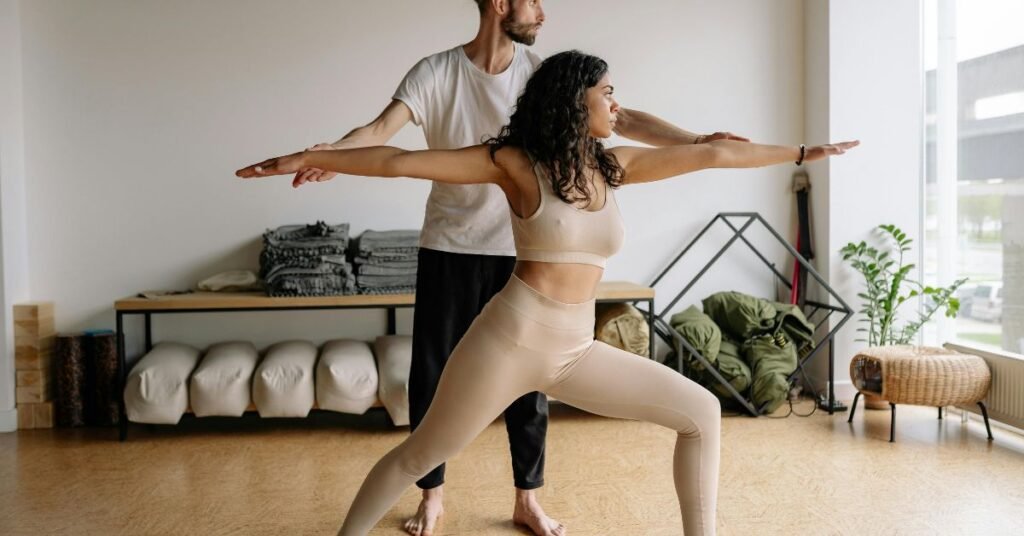
- Warrior I and II (Virabhadrasana I & II): Standing poses that build heat, strength, and focus.
- Tree Pose (Vrksasana): A balance pose to sharpen concentration and feel grounded before leaving the house.
🌙 Best Evening Yoga Styles and Poses
Your goal is to cool down, release tension, and promote rest.
- Recommended Styles: Restorative (using props like blankets and bolsters), Yin (holding poses for long, passive stretches), or Gentle Hatha. These are slow and floor-based.
- Key Poses for Relaxation:
- Child’s Pose (Balasana): The ultimate pose of surrender. Calms the nervous system and relieves back tension.
- Legs-Up-the-Wall (Viparita Karani): A gentle, cooling inversion that calms the mind, relieves tired legs, and promotes deep relaxation.
- Seated or Supine Twist: Amazing for releasing spinal tension from sitting all day and aiding gentle digestion.
- Corpse Pose (Savasana): Absolutely non-negotiable! The practice of stillness and deep rest is the most important pose for unwinding.
🚦 The Schedule Challenge: Consistency Over Clock Time
Let’s be real. Life isn’t always a perfect blend of sunlight and calm evenings. Maybe you have an early work shift, or maybe you have evening family commitments.
Here is the most important guideline you’ll ever hear about yoga:
The best time to do yoga is the time you will actually do it.
A 15-minute practice that happens six times a week is infinitely better than a perfectly scheduled 60-minute practice that only happens once a month. Consistency is the absolute key to reaping the benefits of yoga.
Tips for Making the Time Work for You
- The Early Riser’s Trick: Lay out your yoga clothes and mat the night before. Literally step out of bed and onto the mat. Removing any friction in the morning dramatically increases your chance of sticking to it.
- The Mid-Day Break (The Third Option!): If your mornings are impossible and your evenings are chaotic, try a 10-minute break around 2 PM. A few sun salutations or a few rounds of deep breathing can shake off the afternoon slump better than an energy drink.
- The “Micro-Dose” of Yoga: You don’t need an hour! Try a 5-minute plank (strength) and 5 minutes of legs-up-the-wall (rest). Or, just spend 10 minutes doing deep belly breathing (Pranayama). Short, focused bursts are powerful.
- Listen to Your Energy, Not the Experts: If you feel stiff and tight in the morning, accept that you need to be extra gentle and slow. If you feel wired in the evening, avoid any poses that feel stimulating, like deep backbends, and stick to the floor.
The Final Verdict: How to Choose Your Best Time
So, which is it? Morning or Evening?
Instead of thinking of it as a rigid choice, think of it as a way to balance your life. You might even find you’re a “Two-Timer” (in the best way possible!): a short burst in the morning and a gentle wind-down at night.
Choose Morning If:
- Your primary goal is: Focus, discipline, setting a positive tone, and getting energy.
- Your greatest challenge is: Starting the day feeling alert and getting consistency.
- Your body feels: Stiff and in need of a slow, warm-up (and you are willing to move with extra care).
Choose Evening If:
- Your primary goal is: Stress release, better sleep, deep relaxation, and improved flexibility.
- Your greatest challenge is: Unwinding after work and having a mind that won’t shut off at night.
- Your body feels: Warm and ready for deeper stretches, but tired and in need of restorative poses.
🙏 Your Personal Yoga Experiment
Here’s your homework (the fun kind!):
Don’t just take our word for it. Your body is the only real expert.
- Try Morning Yoga (The Sunrise Test): For one week, commit to a 15-minute energizing flow right after you wake up (before any screen time). Notice how you feel at noon, and how quickly you fall asleep at night.
- Try Evening Yoga (The Sunset Test): The next week, commit to a 15-minute gentle, floor-based session one hour before you plan to go to bed. Notice how deep your stretches feel and how quickly your mind quiets down.
Journal your experience. After two weeks, you’ll have the data you need to make the best choice for your health and happiness.
Remember, yoga is about connection and self-discovery. Whether you choose the quiet stillness of the dawn or the soft comfort of the twilight, the most important thing is that you showed up for yourself. The mat is waiting, no matter what the clock says!

Theo is a dedicated yoga instructor with over six years of experience guiding individuals toward balance, strength, and inner peace through the transformative practice of yoga.As the founder of Pure Yoga Vibes, Theo offers expert insights, inspiring routines, and a wealth of knowledge to support your wellness journey. Committed to fostering a space for growth and mindfulness, Theo’s mission is to make yoga accessible, enjoyable, and meaningful for everyone.
For inquiries or collaborations, feel free to reach out at contact@pureyogavibes.com.