Hello there! Ever feel like your core—that essential powerhouse at the center of your body—is less of a powerhouse and more of a sleepy kitten? You know the feeling. Maybe your lower back is a little grumpy after a long day, or perhaps you’re just looking for that grounded, stable feeling that makes you move through the world with ease and confidence.
If you thought getting a strong core meant endless, neck-straining crunches, I have fantastic news for you: Yoga is your secret weapon. It doesn’t just build six-pack muscles (the rectus abdominis); it trains the whole network—the deep, wrapping muscles (transverse abdominis), the side muscles (obliques), and the essential muscles supporting your spine (erector spinae). Think of it as building a strong, supportive corset from the inside out.
Why does this matter? A truly strong core doesn’t just look good; it literally supports almost everything you do. It improves your balance, fixes your posture (bye-bye, slouching!), cuts down on that annoying back pain, and helps you move better in all your activities, from carrying groceries to running a marathon. It’s your body’s control tower.
This isn’t your average, quick-read list. I’ve put together an in-depth guide to the Top 10 Yoga Poses for Core Strength. We’ll dive into why they work, how to do them correctly (to get the most benefits and stay safe), common mistakes to watch out for (because who hasn’t tried to “help” a pose with their neck?), and simple ways to adjust them, whether you’re a complete beginner or a seasoned yogi looking for a serious challenge.
Ready to stop doing core work that feels awful and start doing core work that feels empowering? Let’s roll out the mat and unlock that inner strength!
🧘 Why Yoga Wins the Core Game
Before we jump into the poses, let’s talk about why yoga is so uniquely brilliant for core strength. It’s all about functional strength.
Most gym core exercises focus on flexing your spine (like a crunch). Yoga, on the other hand, makes your core work hard to keep your spine stable and straight while your arms and legs move around. This functional approach means the strength you build on the mat translates directly to real-life movements.
- It’s 360-Degree Strength: You work the front (abs), the sides (obliques), and the back (spinal muscles) all at once. No muscle group gets to be lazy.
- Mind-Body Connection: You learn to feel your core muscles working. This awareness, often called body awareness or “engaging the core,” is a game-changer. It’s what keeps you stable in a balancing pose and what protects your lower back when you lift a heavy box.
- Breathing is Key: In yoga, your breath is the engine. Learning to breathe deeply and connect that breath to your core engagement (often by drawing the navel gently toward the spine on the exhale) is what activates those deepest, most important stabilizing muscles.
🥇 The Top 10 Core-Crushing Yoga Poses (In a Good Way!)
Here is the ultimate list of poses, starting with foundational stability builders and moving toward more challenging balancing acts.
1. Plank Pose (Phalakasana) – The Essential Foundation
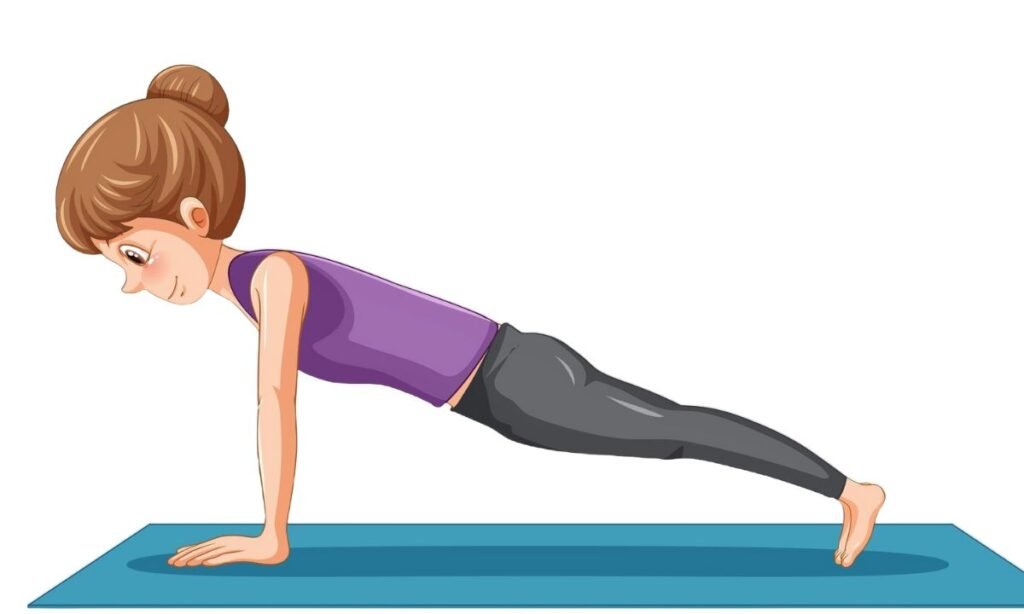
- Why it Works: This is the most famous core pose in yoga, and for good reason. It works your entire front body—abs, shoulders, arms, and quads—in one straight line, teaching you to resist gravity and stabilize your spine.
- How to Do It Right:
- Start on your hands and knees. Place your hands directly under your shoulders.
- Step one foot back, then the other, so your body forms a single straight line from the crown of your head to your heels.
- The Core Hack: Imagine pulling your belly button up toward your spine and tucking your tailbone just slightly. This prevents your lower back from sagging.
- Push the floor away firmly with your hands and draw your shoulders away from your ears. Look down at the floor between your hands to keep your neck long.
⚠️ Common Mistake: The “Saggy Back” or “Mountain Butt”
- Fix It: If your hips are sagging (too low) or lifting high (too high, like a little mountain), you aren’t engaging your deep core properly. Find that middle ground—the straight line—and actively squeeze your glutes (butt muscles) and gently tuck the tailbone.
🛠️ Modifications & Challenges:
- Beginner: Drop your knees to the floor. Keep the straight line from your head to your knees and focus on the core engagement.
- Challenge: Lower onto your Forearms (Dolphin Plank). This is a shorter lever and makes the core work even harder.
2. Boat Pose (Navasana) – The Mighty Abdominal Cruncher
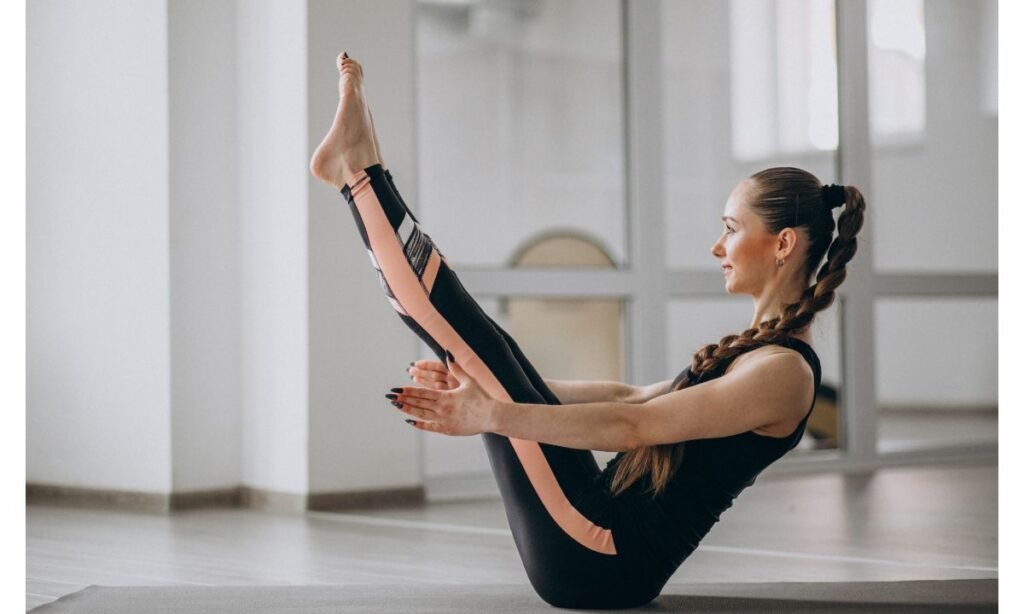
- Why it Works: This is probably the closest yoga gets to a traditional crunch, but it involves those hip flexors and deep lower abdominal muscles in a way crunches don’t. It’s a huge endurance builder.
- How to Do It Right:
- Sit tall with your knees bent and feet flat on the floor. Place your hands behind your hips for support.
- Lean back slightly while keeping your back straight—no slouching! Feel your core muscles turn on.
- Lift your feet, bringing your shins parallel to the floor (like a table).
- If you’re stable, extend your arms forward, palms facing up, parallel to the floor.
- The Core Hack: Focus on lifting your chest up as you lean back. This ensures you’re working your core to keep your spine long and not rounding your back.
⚠️ Common Mistake: Rounding the Back
- Fix It: If your back starts to round like a C-shape, you’ve leaned too far back or haven’t activated your lower back muscles. Bring your feet back down, or hold onto the back of your thighs to help you sit taller. Spine length is more important than leg height.
🛠️ Modifications & Challenges:
- Beginner: Keep your hands on the floor behind you, or keep your knees bent and hold onto the backs of your thighs.
- Challenge: Straighten your legs completely into a “V” shape. For a real burn, slowly lower your legs and upper back toward the floor (Low Boat/Ardha Navasana) and hold a few inches above the floor!
3. Side Plank Pose (Vasisthasana) – The Oblique Sculptor
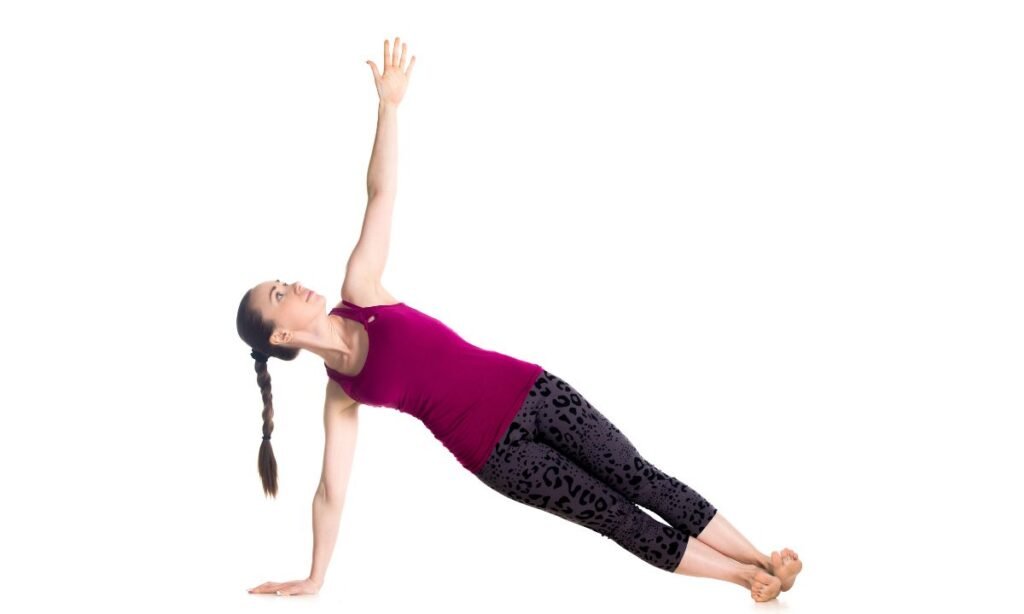
- Why it Works: This pose is amazing for your obliques (the side ab muscles) and is a killer for shoulder stability. It trains your body to resist rotation and lateral flexion—essential for everyday stability.
- How to Do It Right:
- Start in Plank Pose.
- Shift your weight onto your right hand and roll onto the outside edge of your right foot. You can stack your feet or place the top foot on the ground in front of the bottom foot for more balance.
- Reach your left arm up toward the ceiling.
- The Core Hack: Imagine a tiny thread pulling your right hip up toward the ceiling. Don’t let your hips sag toward the floor! Press down firmly through your bottom hand.
⚠️ Common Mistake: Sagging Hips
- Fix It: If your hips are dipping, you need to fire up those obliques! Tuck your tailbone a little, squeeze your glutes, and lift that bottom hip.
🛠️ Modifications & Challenges:
- Beginner: Lower your bottom knee to the floor for support (Modified Side Plank). You still get incredible oblique work.
- Challenge: Lift your top leg up toward the ceiling, or move into a Side Plank with a Thread the Needle Twist by reaching your top arm under your torso and back up.
4. Chair Pose (Utkatasana) – The Standing Powerhouse
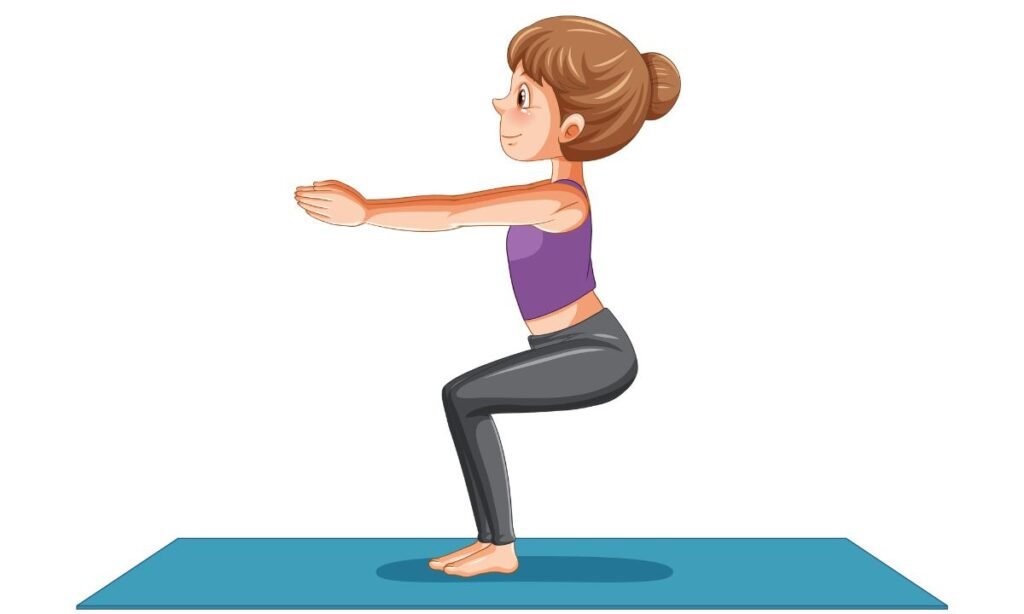
- Why it Works: You might think this is just a leg workout, but Chair Pose requires intense core stabilization to keep your back from arching and to support your pelvis as you “sit” deep. It’s a full-body heat-builder.
- How to Do It Right:
- Stand tall with your feet together (or hip-width apart, if that’s better for your body).
- Inhale and raise your arms up toward the sky.
- Exhale and bend your knees, sitting back as if you are trying to sit in a chair that is just out of reach.
- The Core Hack: Pull your belly button in and down. Tuck your tailbone slightly so your lower back stays long and flat. Make sure you can still see your toes past your knees!
⚠️ Common Mistake: Arching the Lower Back
- Fix It: If your lower back is arching, you’re relying too much on your back muscles. Scoop your tailbone down—not too aggressively, just enough to feel your low abs engage and lengthen your spine.
🛠️ Modifications & Challenges:
- Beginner: Don’t sit down as deep. Keep your hands on your hips.
- Challenge: Add a Chair Twist (Parivrtta Utkatasana): bring your hands to your heart, hook your right elbow onto your left knee, and twist open. This hits your obliques while you fight to keep your lower body stable. Repeat on the other side.
5. Four-Limbed Staff Pose (Chaturanga Dandasana) – The Transition Terminator
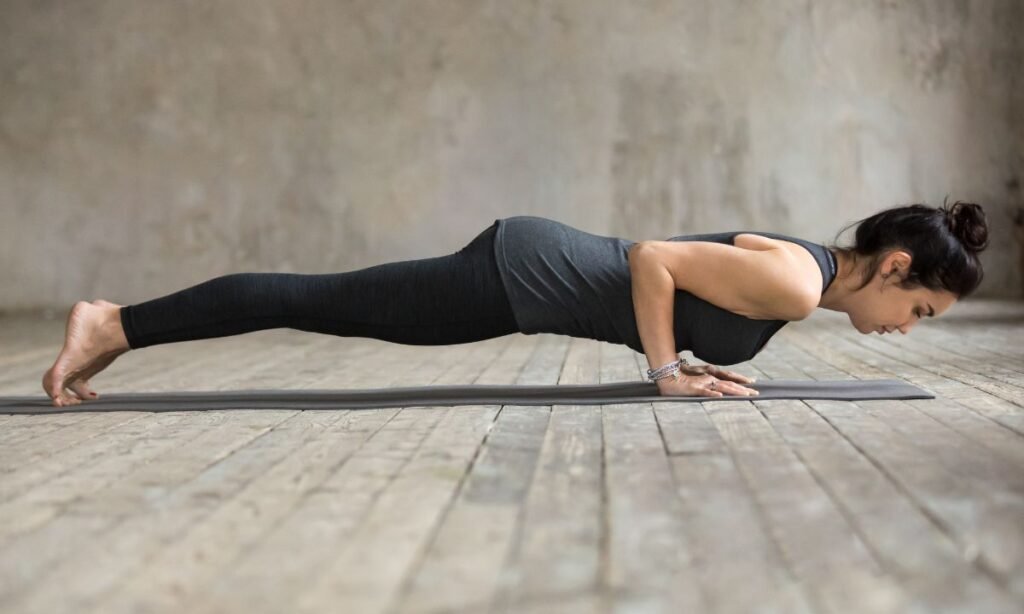
- Why it Works: Often just a quick transition between poses, Chaturanga is an incredible, though notoriously difficult, core and upper body strengthener. Holding your body parallel to the floor requires maximum front-body engagement.
- How to Do It Right:
- Start in Plank Pose.
- Shift your weight slightly forward over your fingertips.
- As you exhale, bend your elbows and keep them glued to your ribs as you lower down.
- Stop when your shoulders are no lower than your elbows (a 90-degree bend). Your body should remain in one straight line.
- The Core Hack: Engage that Plank-level core! If your core sags, you will dump the weight into your shoulders, which can cause injury. Keep everything tight and lifted.
⚠️ Common Mistake: Sagging Core and Flaring Elbows
- Fix It: If your core sags or your elbows wing out to the sides, you’re either not strong enough for the full version yet, or you’ve forgotten to engage your abs.
🛠️ Modifications & Challenges:
- Beginner: Always drop your knees to the floor first! From a modified Plank, shift forward and lower down, maintaining the straight line from head to knees. Protect your shoulders.
- Challenge: Hold the 90-degree angle for a breath or two before moving on.
6. Dolphin Pose (Ardha Pincha Mayurasana) – The Deep Core Activator
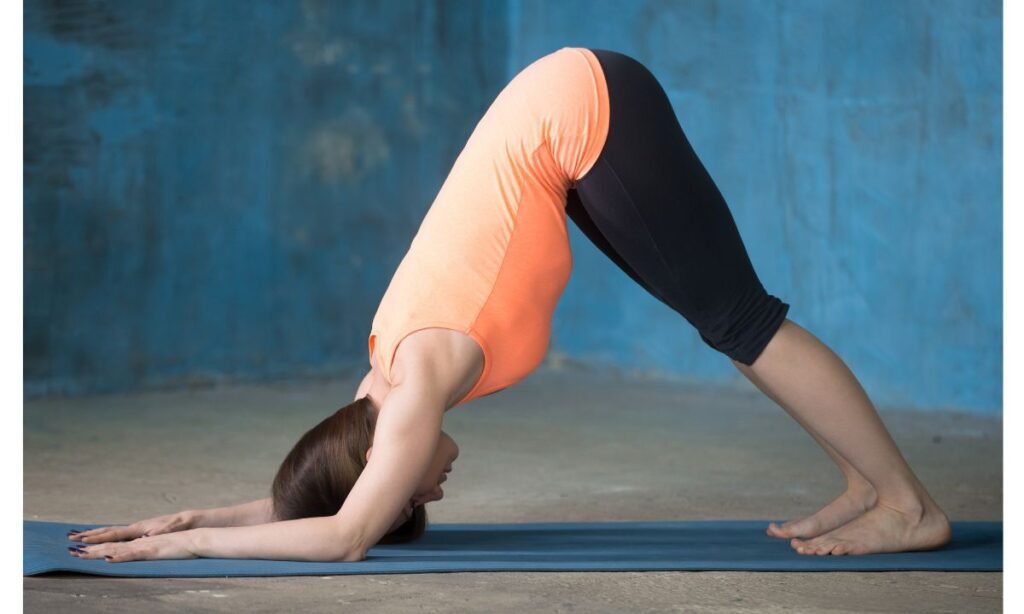
- Why it Works: It’s like Downward-Facing Dog, but on your forearms. This position naturally forces your core to engage even more to stabilize your hips and back, preparing you for more advanced poses like headstands.
- How to Do It Right:
- Start on your hands and knees, then lower to your forearms.
- Your elbows should be shoulder-width apart, and you can either clasp your hands or keep your forearms parallel.
- Tuck your toes, lift your hips high, and press back, creating an upside-down “V” shape.
- The Core Hack: Push down into your forearms and pull your belly in and up. Imagine you are trying to pull your belly button towards your spine while stretching your hips back.
⚠️ Common Mistake: Dumping into the Head and Neck
- Fix It: Don’t let your head dangle and touch the floor. Press strongly through your forearms to lift your shoulders and keep your head lightly hovering.
🛠️ Modifications & Challenges:
- Beginner: Take the pose with your knees slightly bent to focus on the spine length and core connection.
- Challenge: Lift one leg straight up toward the sky (Three-Legged Dolphin).
7. Bird-Dog or Hands and Knees Balance (Bharmanasana Variation) – The Precision Builder
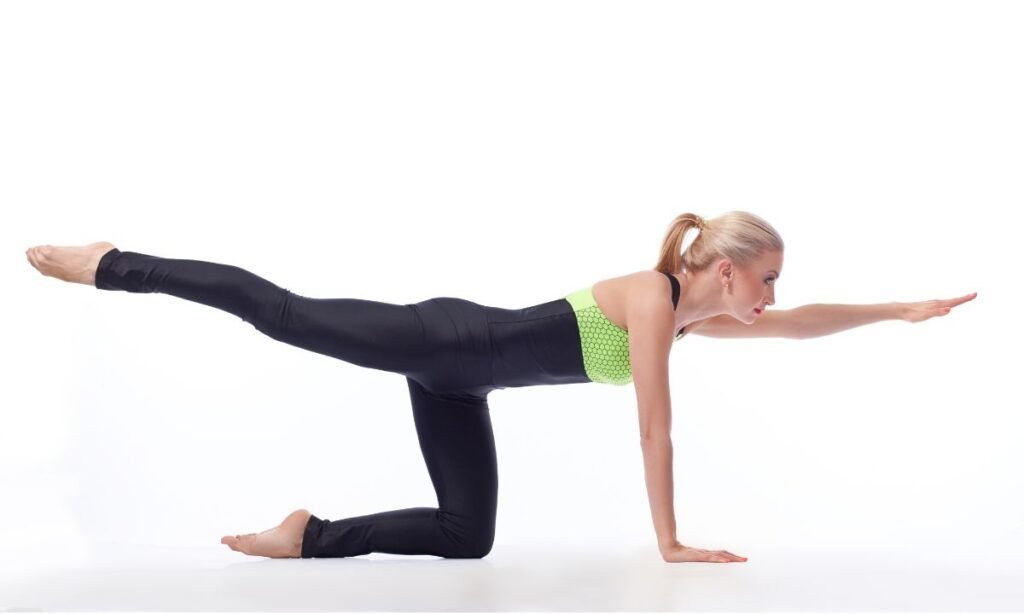
- Why it Works: This might look simple, but extending one arm and the opposite leg forces your core to fight rotation and imbalance. It trains your deep stabilizing muscles to work together in a functional way—exactly what you need to walk, run, or twist.
- How to Do It Right:
- Start on your hands and knees (Tabletop Pose).
- Inhale: Extend your right arm straight forward and your left leg straight back, both parallel to the floor.
- Exhale: Bring them back to center.
- The Core Hack: As you extend, don’t let your hips shift or tilt to the side. Imagine balancing a glass of water on your lower back. Your core has to work hard to keep that glass steady!
⚠️ Common Mistake: Hips Tilting to the Side
- Fix It: Keep your hips absolutely square to the floor. This is where the core work happens! You may not be able to lift your leg as high, and that’s totally fine.
🛠️ Modifications & Challenges:
- Beginner: Only extend the leg at first, keeping both hands on the floor.
- Challenge: Add a crunch: After extending, exhale and bring your knee and elbow together underneath your body, rounding your back. Then inhale to extend. Do 10-15 reps before switching sides.
8. Locust Pose (Salabhasana) – The Low Back Fortress
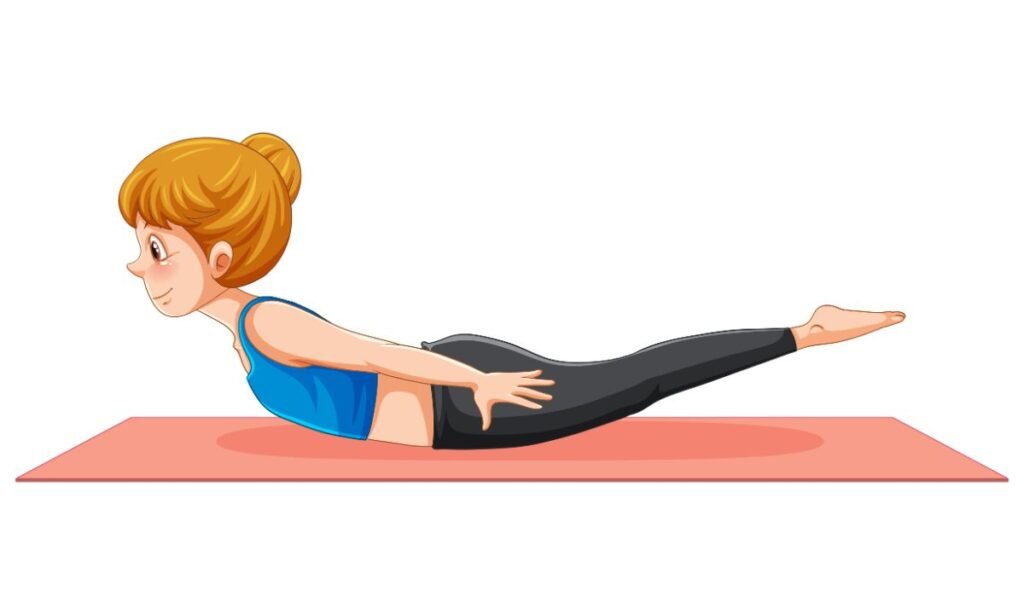
- Why it Works: A strong core isn’t just about the abs; your lower back muscles (erector spinae) are half the equation! This pose strengthens the entire back side of your core, which is vital for good posture and preventing back pain.
- How to Do It Right:
- Lie face-down on your belly with your arms alongside your body, palms down.
- Inhale and, using your back muscles, lift your head, chest, arms, and legs off the floor. Keep your neck long and look down.
- The Core Hack: Press your pubic bone gently into the floor. Reach your fingertips back toward your feet and lengthen your tailbone. Squeeze your glutes to help lift your legs.
⚠️ Common Mistake: Lifting the Head Too High
- Fix It: Don’t crane your neck up! Keep your gaze on the floor just a few inches in front of you to keep your neck in line with your spine.
🛠️ Modifications & Challenges:
- Beginner: Place your hands, palms down, underneath your hip creases. Only lift your upper body first (Half Locust), then only lift your legs.
- Challenge: Clasp your hands behind your back and pull them away from your body as you lift.
9. High Lunge (Anjaneyasana Variation) – The Dynamic Stabilizer
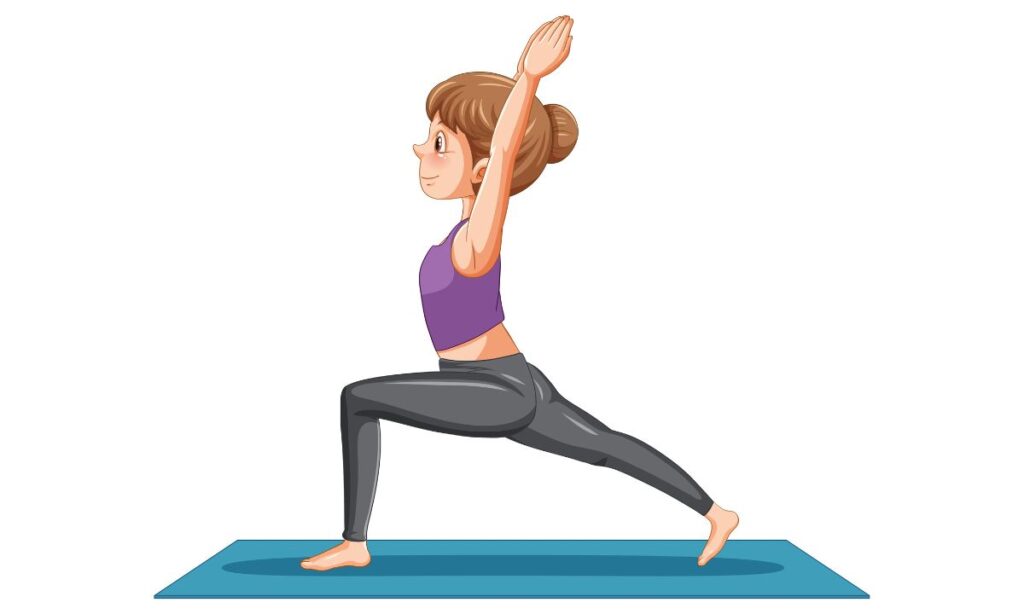
- Why it Works: Holding a high lunge demands significant core engagement to keep your torso centered, especially when you bring your arms overhead. It’s a fantastic pose for building strength and stability in your pelvis.
- How to Do It Right:
- Step into a lunge with your front knee stacked directly over your ankle, back leg straight, and heel lifted.
- Engage your core and lift your torso upright, reaching your arms overhead.
- The Core Hack: Soften your front ribs inward and scoop your tailbone down slightly. This stops you from arch-bending your lower back and forces the core to do the work of keeping you balanced and straight.
⚠️ Common Mistake: Arching the Back
- Fix It: If your lower back is pinching, you’ve arched too much. Pull those front ribs in! It’s less about a big, dramatic stretch and more about a solid, stable foundation.
🛠️ Modifications & Challenges:
- Beginner: Drop your back knee to the floor (Low Lunge) for added stability.
- Challenge: Move into a Lunge Twist: bring your hands to your heart and twist to hook your opposite elbow over your front knee. This adds a rotational challenge for the obliques.
10. Half Moon Pose (Ardha Chandrasana) – The Ultimate Balancer
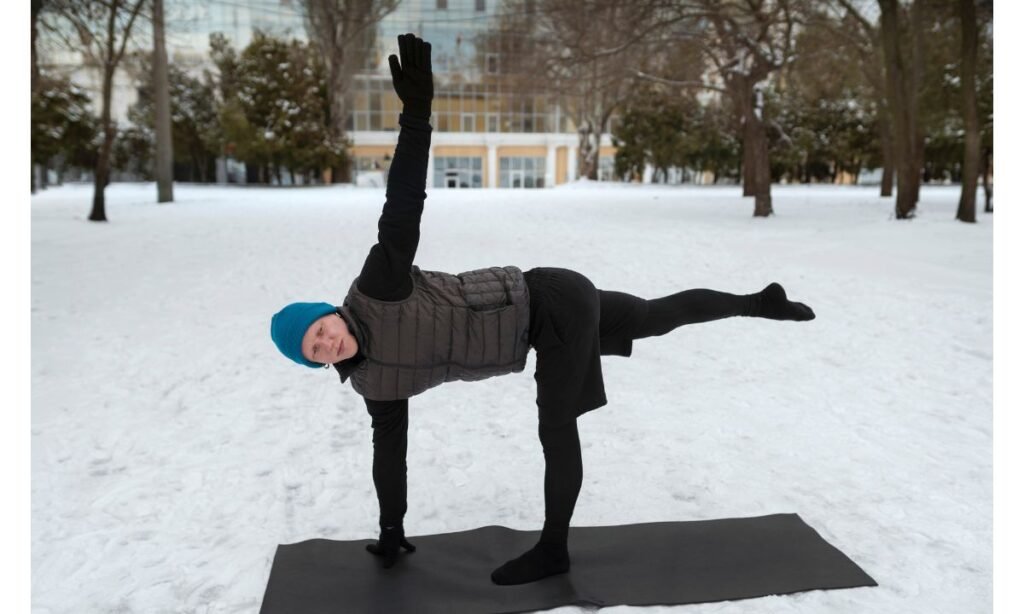
- Why it Works: Any balancing pose is a core pose, and Half Moon is arguably the best. To balance on one leg while opening your body to the side requires an intense level of lateral (side-to-side) core stability and focus.
- How to Do It Right:
- From a standing position, shift your weight onto your right leg. Place your right hand on the floor or a block in front of your right foot.
- Lift your left leg until it’s parallel to the floor, and extend your left arm to the sky. Open your hips and chest to the side.
- The Core Hack: Pull your lower belly up and in, and squeeze your standing leg’s buttock. Imagine you are pressing your back against an imaginary wall to keep your body in one plane.
⚠️ Common Mistake: Falling Over! (And Not Opening the Hip)
- Fix It: Don’t be afraid to use a yoga block under your bottom hand! It helps you reach the floor without rounding your back. Focus on opening the top hip—let your core pull it open and level it with your shoulder.
🛠️ Modifications & Challenges:
- Beginner: Use a block under your hand. Practice near a wall and use the wall for support for your back and lifted foot.
- Challenge: Take the gaze up toward your lifted hand, or try the challenging Sugar Cane Pose (Ardha Chandra Chapasana) by bending your lifted knee and catching your foot with your lifted hand.
🔑 Your Core Strength Strategy: Tips for the Journey
Building a strong core isn’t a race; it’s a gradual process of consistent work and careful attention. Here are a few essential tips to make sure your yoga practice is truly effective and safe.
Focus on the Feel, Not the Look
A common mistake is trying to make the pose look exactly like the picture, which often means sacrificing proper alignment.
“The most important thing in yoga is how you do the pose, not how deep you go. Don’t worry if your legs aren’t perfectly straight in Boat Pose or if you need to drop your knees in Plank. If you feel the engagement in your core, you are doing it right.”
Your core is working hardest when it’s stabilizing, not when it’s contorting. Listen to your body—it will tell you if you’re pushing too hard or if you need to engage those deeper muscles.
The Magic of Breath and Engagement
We talked about it earlier, but it’s worth repeating: Your breath activates your core.
- Inhale: Breathe wide, expanding your ribs and filling your belly.
- Exhale: Gently draw your belly button in toward your spine. This subtle movement is what turns on your deep transverse abdominis (that “corset” muscle).
Practice this gentle engagement in every pose, even simple standing poses. It will become second nature, and your stability will skyrocket.
Don’t Forget the Back!
A lot of people focus only on the “six-pack” muscles, forgetting that the core is a 360-degree system. Poses like Locust Pose (No. 8) are just as important as Boat Pose (No. 2). A strong back protects you from injury and keeps your posture upright and proud.
How Often Should You Practice?
Consistency is far more important than intensity.
- Aim for a 10–15 minute core session 3–4 times a week. This could be a sequence of the poses listed above.
- Incorporate core awareness into your daily life. Next time you stand up, lift a bag, or even just sit at your desk, gently pull your navel to your spine. That counts!
Listen to Your Lower Back
If you feel sharp, shooting, or intense pain in your lower back, stop immediately. It often means your deeper core isn’t engaged, and your lower back muscles are compensating.
- The Fix: Back off the intensity, find an easier modification (like dropping your knees in Plank), and focus only on the core engagement—that feeling of the low abs gently hugging in.
🌟 Wrapping It Up: Your Center of Power Awaits
A strong core is the foundation for a strong life, both on and off the yoga mat. It’s what allows you to move freely, stand tall, and greet the world with a sense of stability and balance.
By incorporating these ten powerful, functional yoga poses into your routine, you are doing more than just building muscle; you are cultivating a deep, inner strength that will benefit you every single day.
Forget the punishing routine; welcome the empowering practice. Embrace the wobble, honor your modifications, and remember to laugh when you fall out of Half Moon. You’re building a fortress, one breath and one pose at a time.
Which pose are you going to tackle first?

Theo is a dedicated yoga instructor with over six years of experience guiding individuals toward balance, strength, and inner peace through the transformative practice of yoga.As the founder of Pure Yoga Vibes, Theo offers expert insights, inspiring routines, and a wealth of knowledge to support your wellness journey. Committed to fostering a space for growth and mindfulness, Theo’s mission is to make yoga accessible, enjoyable, and meaningful for everyone.
For inquiries or collaborations, feel free to reach out at contact@pureyogavibes.com.