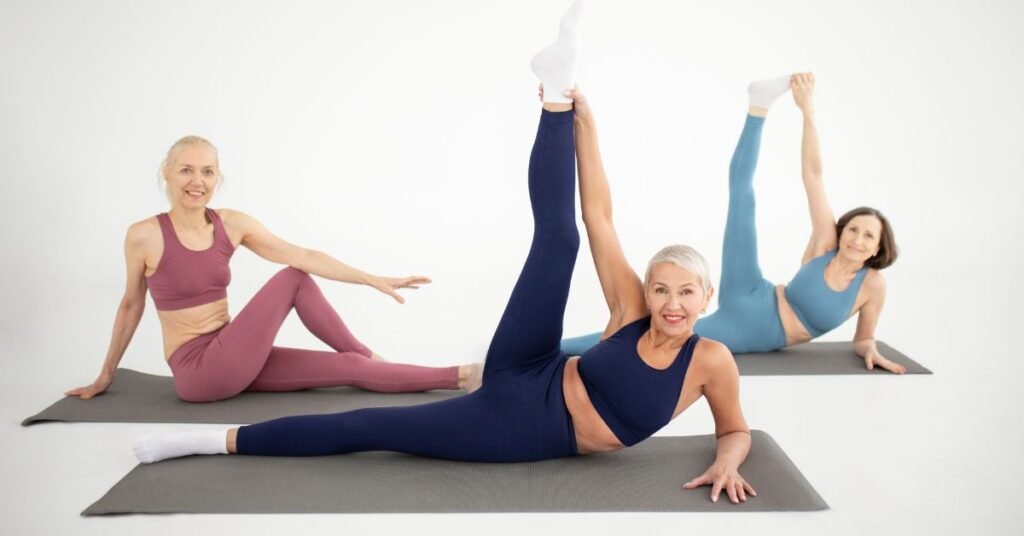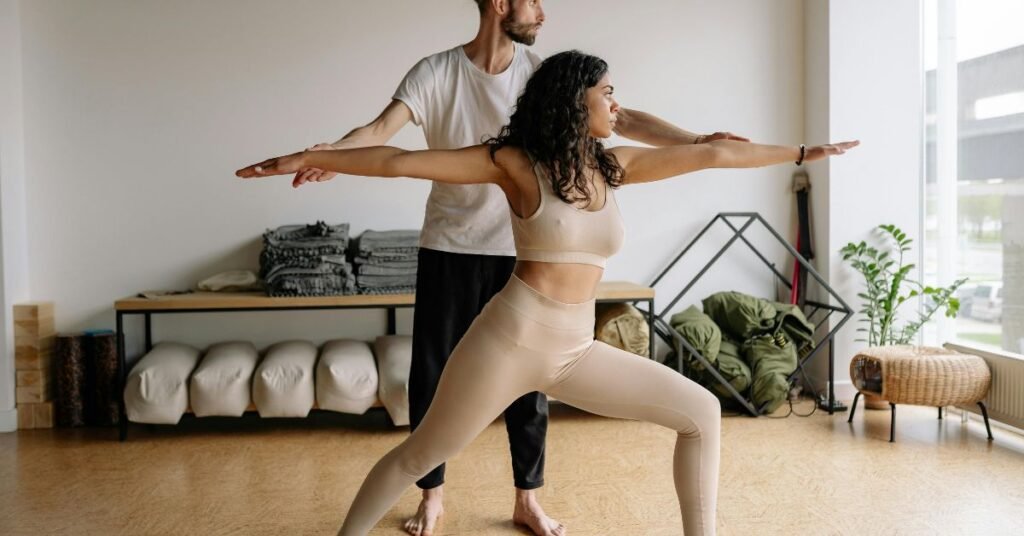
In the West, when you hear the word “yoga,” what comes to mind? Is it a studio full of people sweating through a dynamic flow? Is it a woman in a perfectly balanced tree pose against an impossibly beautiful sunset? For most people, yoga is synonymous with physical postures, the asana that stretch and strengthen the body.
If that’s your picture of yoga, prepare to have your mat rolled out from under you—in the best possible way!
The truth is, the physical poses are just one small piece of a much, much bigger picture.
For over 2,000 years, the comprehensive philosophy of yoga has been laid out in a foundational text called the Yoga Sutras, compiled by the sage Patanjali. He didn’t write a guide to getting a six-pack; he wrote a roadmap for achieving inner peace, clarity, and ultimate freedom—a state known as Samadhi.
This roadmap is what we call the Eightfold Path of Yoga, or Ashtanga Yoga (Ashta meaning eight, anga meaning limbs).
It’s not a list of commands, but a beautiful, holistic, step-by-step guide on how to live a meaningful, purposeful, and genuinely happy life. It’s about cleaning up your act in the world, then cleaning up your inner world, and finally, experiencing the deep, quiet joy of your true self.
Ready to see how the philosophy that underpins your downward dog can transform your life off the mat?
What Is the Eightfold Path (Ashtanga Yoga)?
Think of the eight limbs not as eight separate rungs on a ladder that you climb one after the other, but as eight interconnected branches of a single, mighty tree. They all grow at the same time and support one another. If you nurture one, the others naturally flourish.
Patanjali structured these eight limbs to guide a practitioner from the external and ethical world (how we interact with others) to the internal and spiritual world (how we interact with our own mind and consciousness).
The eight limbs are:
- Yamas: Social Ethics (Our attitude toward the outside world)
- Niyamas: Personal Observances (Our attitude toward ourselves)
- Asana: Physical Postures
- Pranayama: Breath Control
- Pratyahara: Withdrawal of the Senses
- Dharana: Concentration
- Dhyana: Meditation
- Samadhi: Absorption/Bliss
Let’s dive deep into each one, translating these ancient ideas into practical, relatable steps for modern life.
🌳 The First Two Limbs: Planting the Seeds of Ethical Living (Yamas & Niyamas)
Before Patanjali even gets to a single physical pose, he insists that we first get our act together socially and personally. This is crucial: the philosophy argues that if your life is full of internal and external chaos, there’s no way your mind can become calm enough for true meditation. You can’t sit still if you’re worried about who you lied to yesterday or whose property you stole!
Limb 1: The Yamas (How We Treat Others—The “Don’ts”)
The Yamas are a set of five moral guidelines—they are how we practice restraint and responsibility in our dealings with the external world. They are often called the “universal morality” because they make sense no matter where or when you live.
1. Ahimsa: Non-Violence, Kindness, and Compassion
- The Big Idea: Do no harm, not just physically, but in your words and even your thoughts.
- Easy English Application: This is about actively choosing kindness. It means avoiding road rage, skipping gossip, and being nice to yourself (yes, self-harm includes that brutal self-criticism we all do!). On a larger scale, it inspires vegetarianism or veganism for some, and for all, it promotes conscious consumption.
- The Human Element: Think about how much energy we waste being angry or judgmental. When you practice Ahimsa, you create a bubble of peace around yourself. If a driver cuts you off, instead of screaming, you might sigh and think, “Maybe they’re late for the hospital.” Your heart rate stays low, and you’re the winner of that interaction.
2. Satya: Truthfulness and Honesty
- The Big Idea: Commit to truth in your thoughts, words, and actions.
- Easy English Application: Telling the truth is obvious, but Satya goes deeper. It’s about skillful truthfulness. Patanjali suggests that your truth should not cause unnecessary harm (see Ahimsa). So, if your friend asks if you like their new outfit, and it looks truly terrible, an absolute truth (“That is the worst thing I’ve ever seen!”) violates Ahimsa. A better, kinder truth (Satya infused with Ahimsa) might be, “It’s certainly a bold color, but I think the blue one looked amazing on you.” It’s about honesty delivered with compassion.
- The Human Element: We lie for all sorts of small reasons: to avoid conflict, to look good, or to cover a mistake. But every lie, big or small, creates a tiny knot of tension in your gut. When you speak truthfully (and kindly), you feel lighter. Your words become reliable, and your self-trust skyrockets.
3. Asteya: Non-Stealing and Integrity
- The Big Idea: Do not take what has not been freely given to you.
- Easy English Application: This is bigger than just not shoplifting. It means not stealing time (like habitually showing up late for a meeting), not stealing intellectual property (like plagiarizing), and not stealing credit for someone else’s work. It even means not stealing from your own future by procrastinating today.
- The Human Element: Imagine working with someone who constantly takes credit for your ideas. How does that feel? Asteya prevents you from being that person. It cultivates an inner sense of completeness. When you trust you have enough, you stop the frantic need to grab, rush, or take.
4. Brahmacharya: Right Use of Energy, Moderation, and Non-Excess
- The Big Idea: Originally translated as celibacy, in a modern context, this means wisely managing your energy, especially sexual energy, and avoiding sensual excess.
- Easy English Application: This is about moderation and mindful energy expenditure. It means avoiding binge-watching until 3 AM, overspending your money, or constantly seeking external pleasures (food, drink, media) to fill an internal void. It’s about conserving your vital energy and directing it toward your highest goals.
- The Human Element: We all know the feeling of being completely drained—physically, mentally, and emotionally. Brahmacharya is the practice of protecting your personal battery. It gives you the power to say “No, thank you” to the things that deplete you, so you have a powerful “Yes!” for the things that truly matter.
5. Aparigraha: Non-Possessiveness, Non-Hoarding, and Letting Go of Greed
- The Big Idea: Release the need to accumulate things you don’t need and to hold onto ideas, people, or outcomes too tightly.
- Easy English Application: This is the ultimate detox from consumerism and attachment. It encourages decluttering your home (and your calendar!) and letting go of the need for an external object to define your happiness. It’s also about emotional non-attachment—releasing the need to control how things must turn out.
- The Human Element: We’ve all been trapped by the belief that one more thing will make us happy. Aparigraha breaks that cycle. It is the relief of letting go of what doesn’t serve you. When you’re free from the worry of acquiring and protecting possessions, you find true abundance in simplicity.
Limb 2: The Niyamas (How We Treat Ourselves—The “Do’s”)
If the Yamas are about cleaning up your messy outward relationships, the Niyamas are about cultivating positive habits and self-discipline—a daily internal tune-up that prepares your mind for higher states of awareness.
1. Saucha: Purity and Cleanliness (Body, Mind, and Environment)
- The Big Idea: Maintain purity and cleanliness on all levels: physical, mental, and environmental.
- Easy English Application: Saucha means taking a shower, eating healthy food (to keep the internal body clean), and keeping your living space tidy. More importantly, it means mental hygiene—avoiding toxic relationships, negative media, and thoughts that pollute your inner space.
- The Human Element: You can feel the difference between walking into a messy, stuffy room and a clean, airy one. The same is true for your mind. When you clear out the mental clutter and stop consuming junk (both food and information), your thinking becomes clearer and lighter.
2. Santosha: Contentment and Acceptance
- The Big Idea: Find contentment in what you have and where you are, accepting your circumstances as they are right now.
- Easy English Application: This is not a call to stop setting goals. It is about releasing the constant, stressful comparison and the thought that “I’ll be happy when…” Santosha is about enjoying the journey. It means being fully present and grateful for the good that is already here.
- The Human Element: We all chase that “grass is greener” feeling, but that chase is exhausting! Santosha is the ultimate stress-reliever. When you can genuinely say, “This is enough, I am enough,” you trade anxiety for a deep, unshakable inner satisfaction.
3. Tapas: Self-Discipline, Austerity, and “Burning Desire”
- The Big Idea: Cultivate disciplined effort and passionate commitment, often translated as “heat” or “burning away impurities.”
- Easy English Application: Tapas is the discipline that keeps you on the mat, not just for the poses, but for your life goals. It’s choosing the healthy meal when you crave junk, getting up for your morning practice even when the bed is cozy, and sticking to a project even when it gets hard. It’s the intentional discomfort that leads to growth.
- The Human Element: This is where you build your inner muscle of willpower. Think of the incredible satisfaction of finishing a difficult task. That feeling is the reward of Tapas. It’s not about punishing yourself; it’s about honoring your long-term goals over short-term gratification.
4. Svadhyaya: Self-Study and the Study of Sacred Texts
- The Big Idea: Engage in self-reflection and the study of inspiring knowledge.
- Easy English Application: This is about becoming a student of yourself—journaling, therapy, honest self-inquiry, and figuring out why you do what you do. It also includes reading books, scriptures, or philosophy (like these Yoga Sutras!) that uplift your mind and expand your understanding of the world.
- The Human Element: The biggest mystery we face is usually our own mind. Svadhyaya is the detective work—it’s how you find the patterns, the triggers, and the limiting beliefs that hold you back. The more you know yourself, the less surprised you are by your own reactions, leading to less stress and better choices.
5. Ishvara Pranidhana: Surrender to a Higher Power or Devotion
- The Big Idea: Surrender your ego and dedicate your actions to a divine or greater principle.
- Easy English Application: This doesn’t necessarily mean believing in a specific god. It means acknowledging that you are not the center of the universe. It’s about doing your best work and then letting go of the outcome. When you dedicate your effort to a greater good, you release the anxiety of personal success or failure.
- The Human Element: This limb is the ultimate relief from the crushing pressure of your ego. When you practice Ishvara Pranidhana, you lighten your load. You say, “I’ll do the work, but I’m not going to stress about the results.” This simple act of surrender frees up immense mental energy.
🤸 The Middle Limbs: The Body and the Bridge (Asana, Pranayama, Pratyahara)
Once the ethical foundation is laid with the Yamas and Niyamas, the focus shifts to the body and the breath. These three limbs are often seen as the “bridge” that takes us from the external world of action to the internal world of meditation.
Limb 3: Asana (Physical Postures)
Asana is the one limb most of the modern world confuses for the entirety of yoga. But in Patanjali’s original text, the discussion of Asana is surprisingly brief. It simply defines a posture as that which is “steady and comfortable” (Sthira Sukham Asanam).
The True Purpose of Asana
The physical practice was not initially developed for calorie-burning or flexibility displays; it was a practical necessity. The ultimate goal of the yogi was to sit in meditation for long periods. If your body was stiff, weak, or riddled with discomfort, your mind would be too distracted to achieve deeper states.
- Preparation for Stillness: The poses are designed to prepare the body—to build the stability (Sthira) and the ease (Sukha) required to sit without fidgeting.
- A Moving Meditation: Today, the Vinyasa-style classes we know transform Asana into a moving meditation by linking movement with the breath (which we’ll get to next). This helps us practice concentration and awareness in the midst of effort.
- Body Awareness: Asana is a practical application of the Yamas and Niyamas. When you find your edge in a pose—the point of challenge before pain—you practice Ahimsa (non-violence) by not pushing too hard. When you stay in a difficult pose for a few breaths, you practice Tapas (self-discipline).
How to Apply Asana Beyond the Mat:
The real-world application of Asana is not just about stretching—it’s about posture in life. How do you sit at your desk? How do you stand when talking to someone important? A healthy, stable posture reflects a confident, stable mind. Pay attention to how you carry yourself; your physical attitude informs your mental attitude.
Limb 4: Pranayama (Breath Control and Life Force Expansion)
If Asana is the physical bridge to the inner world, Pranayama is the key to crossing it. Prana means “life force” or “vital energy,” and Ayama means “extension” or “control.” Therefore, Pranayama is the systematic control and expansion of this energy through the breath.
Why the Breath is Everything
In yoga philosophy, the breath is seen as the physical manifestation of the mind. Think about it:
- When you are panicked, your breath is quick and shallow.
- When you are calm and asleep, your breath is slow and deep.
- The two are inseparable: change your breath, and you immediately change your mind.
The practice of Pranayama, using techniques like the three-part breath (Dirga), alternate nostril breathing (Nadi Shodhana), or the “ocean breath” (Ujjayi), is the direct way to:
- Calm the Nervous System: Slow, deep breathing signals safety to your brain, shifting you out of the stressful “fight or flight” (sympathetic) mode into the restful “rest and digest” (parasympathetic) mode.
- Purify the Energy Channels: Yogis believe that controlling the breath clears mental and energetic “fog” (vṛtti), making concentration much easier.
- Increase Focus: By concentrating intensely on the rhythm of the breath, you automatically quiet the mind’s constant noise.
The Human Element of Pranayama:
The most powerful takeaway from Pranayama is this: You always have an anchor. In the middle of a work crisis, a family argument, or an anxiety spiral, you can pause for three slow, deep breaths. That’s not a cliché; that’s using an ancient, perfected technique to literally change your internal chemistry and reclaim your power.
Limb 5: Pratyahara (Withdrawal of the Senses)
This is arguably the most challenging and essential of the “bridge” limbs for modern life. Pratya means “to withdraw” or “draw back,” and Ahara means “food” or “anything we take in.”
Pratyahara is the art of turning your attention inward, away from the constant noise and stimulation of the external world.
The Modern Challenge of Pratyahara
We live in a world of sensory overload:
- Sight: Endless screens, flashing ads, constant visual media.
- Sound: Headphones, traffic, notifications, background TV noise.
- Taste/Smell: A constant parade of overly stimulating, processed foods and drinks.
Our attention is perpetually being stolen by things outside of us. Pratyahara teaches the mind to stop blindly following the senses wherever they lead.
- A Gentle Closing: It’s not about physically blocking your senses (you don’t suddenly go deaf), but about withdrawing the mind’s attention from the sensory input. Think of your senses like a turtle’s limbs—it can choose to pull them back into its shell.
- A Precursor to Meditation: This is the critical step between having control over your body and breath, and having control over your mind. If you can’t stop your mind from chasing every sound and sight, you can’t concentrate.
How to Practice Pratyahara Daily:
- Digital Detoxes: Turn off notifications, leave your phone in another room while eating, or commit to an hour without screens before bed.
- Mindful Eating: When you eat, just eat. Don’t scroll, don’t read. Focus on the taste, texture, and smell.
- Closing Your Eyes: Simply close your eyes for a minute when you feel overwhelmed. This instantly cuts off the biggest source of sensory input and forces your attention inward.
🌌 The Final Limbs: The Inner Journey to Freedom (Dharana, Dhyana, Samadhi)
The first five limbs—Yama, Niyama, Asana, Pranayama, and Pratyahara—are often called the preparatory steps because they deal with the body, the breath, and our external relationships. The final three limbs are purely internal practices and are known as the Antaranga Yoga (internal yoga). This is where the real deep-sea diving of consciousness begins.
Limb 6: Dharana (Concentration)
Dharana is the practice of focused, single-pointed concentration. The goal of this limb is to bind the mind to one object, preventing it from wandering.
Focus: The Wild Horse of the Mind
Think of your mind like a wild horse constantly galloping in every direction. Dharana is putting the reins on that horse and training it to focus on a single point.
The object of concentration can be anything:
- A physical object (a candle flame, a flower, a mandala).
- An internal sensation (the breath entering and leaving the nostrils).
- A sound (a mantra like Om).
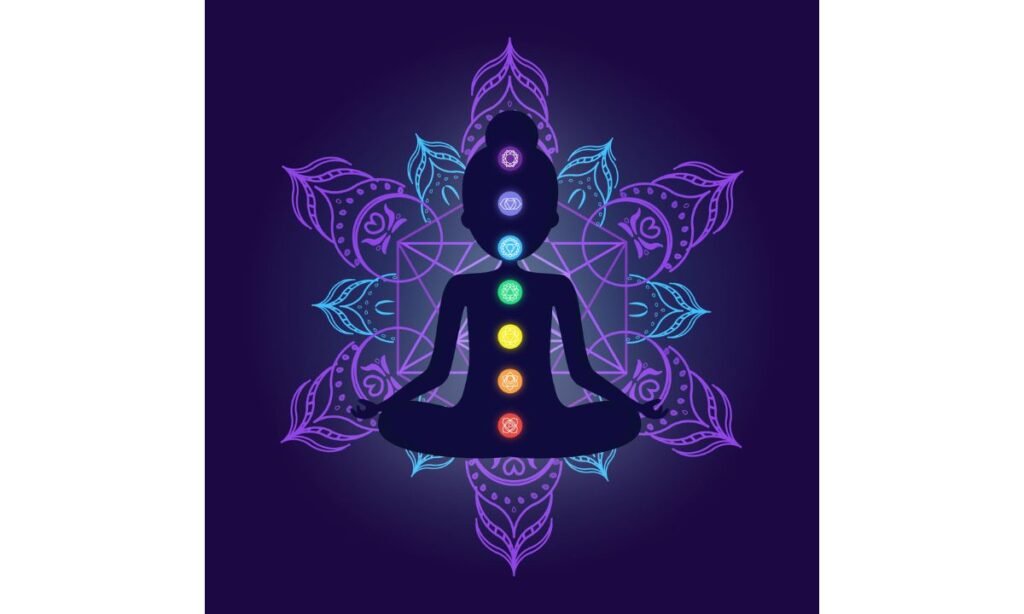
- A specific energetic point in the body (a chakra).
The key is that the concentration is an active effort. The mind will try to wander—it’s what minds do! Your job in Dharana is to gently, repeatedly, and without judgment, bring it back to the chosen point of focus. It’s mental reps at the gym.
Why Dharana Matters in the Real World:
The modern equivalent of Dharana is deep work or flow state. When you practice single-pointed concentration on your mat, you are training your brain to ignore distractions so you can be fully present and effective in your work, conversations, and relationships. It’s the difference between a scattered, multi-tasking day and a focused, productive one.
Limb 7: Dhyana (Meditation)
Dhyana is what happens when Dharana (concentration) becomes effortless and sustained. It is the practice of meditation itself—a continuous flow of attention toward the object of focus without interruption.
The Difference Between Concentration and Meditation
- Dharana (Concentration): Active effort. You are deliberately trying to keep your mind on the object, constantly pulling it back from wandering. (Example: A flashlight being deliberately aimed at a spot on the wall.)
- Dhyana (Meditation): Effortless awareness. The mind is so absorbed in the object that the pulling back is no longer necessary. The flow of attention is unbroken. (Example: The entire room is now illuminated by a continuous beam of light, and you are simply observing the light.)
In Dhyana, you are no longer the doer of the meditation; you become the observer of the pure, unbroken awareness. You are simply present, watching the mind without engaging in its stories, worries, or plans. You see your thoughts for what they are—fleeting mental events, not absolute reality.
The Power of Dhyana:
This is where the true gifts of clarity, emotional regulation, and deep inner peace are cultivated. Regular Dhyana practice fundamentally changes your relationship with your thoughts, reducing the power of anxiety and stress.
Limb 8: Samadhi (Absorption, Bliss, or Enlightenment)
This is the final destination of the Eightfold Path, the goal of the entire system. Samadhi is often translated as “absorption,” “ecstasy,” or “super-consciousness.” It is the state of profound oneness.
The Ultimate Union
In this state, the boundaries that define us—the ones that separate the meditator (the subject), the act of meditating (the process), and the object of meditation (the object of focus)—completely dissolve.
- It is not a blank mind or an emotional high; it is a profound realization of unity with all things.
- The wave (your individual self) realizes that it has always been, and still is, the ocean (universal consciousness).
- Patanjali defines yoga itself as Yogas Chitta Vritti Nirodhah—the cessation (or stilling) of the fluctuations of the mind. Samadhi is the ultimate experience of that stilling.
Samadhi in Daily Life (Yes, Really!):
While complete, permanent Samadhi is the stuff of advanced yogis and sages, you can experience glimpses of this oneness in your own life. These moments are often called “flow states”—that intense, joyful absorption when you are completely lost in an activity you love, like painting, playing music, or running. In that moment, the “you” worrying about the past or planning the future disappears, and there is only the pure, effortless experience of the present. This feeling of unity, of total presence, is a taste of the final limb.
✅ Making Yoga’s Eight Limbs Helpful in Your Modern Life
The biggest mistake we make is treating yoga philosophy like a historical artifact. For your practice to be truly “helpful” (as Google’s guidelines suggest), you need to make it practical.
Here are three simple, human ways to integrate the entire path—from the ethics to the ecstasy—into your every single day:
1. Use the Limbs as a Daily Check-In
Instead of trying to be perfect, use the 10 core principles (the 5 Yamas and 5 Niyamas) as a lens to review your day for just five minutes before bed.
- Did I practice Satya today? (Did I speak my truth kindly? Did I lie to avoid an awkward conversation?)
- Did I practice Santosha today? (Did I spend more time appreciating what I have, or lamenting what I lack?)
- Did I practice Ahimsa toward myself? (Was my internal self-talk unnecessarily cruel or judgmental?)
This simple reflection brings the entire philosophy into the realm of practical, personal growth.
2. Your Desk Chair is Your Asana
Don’t wait for the studio to find your Asana (steady and comfortable seat). The next time you sit at your desk, in your car, or on the couch, correct your posture. Feel the stability (Sthira) of your sit bones and the ease (Sukha) in your shoulders. Practice Tapas (discipline) by sitting upright even when it feels challenging. This is yoga.
3. Breathe Before You React
The moment a trigger hits you—a frustrating email, a loud noise, a demanding request—your body tenses. This is the moment to pull your mind back from the external stimulus (Pratyahara) using your breath (Pranayama). Take one long, slow, deep inhale, and an even longer, slower exhale. This tiny pause is your Dharana (concentration). It gives you the space to choose a kind, skillful response instead of a reactive, regrettable one.
The Final Takeaway
Patanjali’s Eightfold Path is not a rigid set of rules designed to make you into a perfect, ethereal being. It is a process of refinement—a way to chip away at the layers of anxiety, delusion, and distraction that prevent you from experiencing the effortless joy that is your true nature.
When you bring the ethics off the mat, the breath into your day, and the concentration into your life, you are not just doing yoga—you are living it. You are stepping onto an ancient, reliable path that leads to a deeply peaceful and meaningful existence, regardless of what the external world throws your way.
The journey is long, but every intentional step, every kind word, and every conscious breath brings you closer to the Samadhi—the ultimate feeling of coming home.

Theo is a dedicated yoga instructor with over six years of experience guiding individuals toward balance, strength, and inner peace through the transformative practice of yoga.As the founder of Pure Yoga Vibes, Theo offers expert insights, inspiring routines, and a wealth of knowledge to support your wellness journey. Committed to fostering a space for growth and mindfulness, Theo’s mission is to make yoga accessible, enjoyable, and meaningful for everyone.
For inquiries or collaborations, feel free to reach out at contact@pureyogavibes.com.